Eyeliner by eye shape: the chart
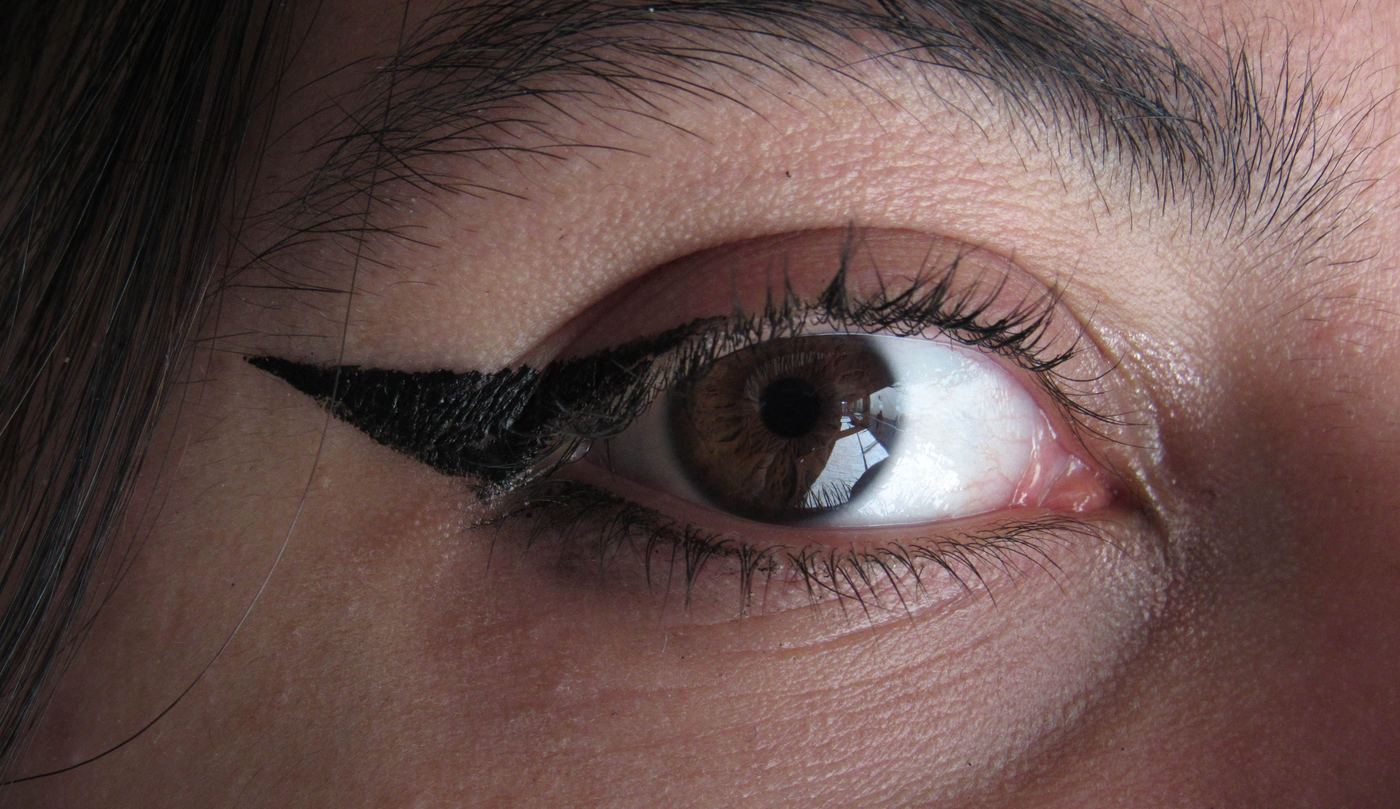
Almost every eyeliner tutorial is drawn on one eye: almond-shaped, level corners, a crease you can see with the eye open. If that is your eye, the standard advice works. If it is not, the same steps produce a wing that disappears, points the wrong way, or makes the eye look smaller, and it is easy to conclude that you are bad at eyeliner. You are not. The tutorial was drawn on a lid you do not have.
This page is the map. Three questions tell you which shape you are working with, the chart shows where the liner goes for each, and the shapes that need a full guide of their own link out to one.
On this page
Three questions that tell you your shape
Look straight ahead into a mirror at eye level, face relaxed, no raised brows. Answer these in order.
- Can you see a crease above your lid with your eyes open? If yes, you have visible lid space and the classic shapes apply. If a fold of skin covers the crease, you are hooded. If there is no crease at all and the lid runs smoothly up to the brow, you are monolid. This is the question that matters most, because it decides whether anything drawn on the lid will still be visible when you open your eye.
- Where does the outer corner sit compared with the inner corner? Imagine a line through the two corners. Level is the default. Tilted up at the outer end is upturned. Tilted down is downturned. This question decides which direction a wing should travel.
- Is the eye about as tall as it is wide? A visibly round opening, with white showing above or below the iris when you look straight ahead, is round. A clearly wider-than-tall opening with the iris touching both lids is almond. This question decides whether liner should add length or add openness.
Two further shapes are about depth rather than outline. Deep-set eyes sit back under a prominent brow bone, so the lid is in shadow. Protruding eyes do the opposite: the lid is forward and prominent, with a lot of visible lid space. Both change how much liner the eye can carry.
The chart
Shape by shape
Almond
The shape every tutorial assumes, so the standard advice is the right advice: a line that starts thin near the inner corner and thickens toward the outer third, with a wing that continues the line of the lower lashes upward and outward. The winged eyeliner guide is written for this eye. If you are almond-shaped and liner still misbehaves, the problem is formula or surface rather than shape, so start with why your eyeliner smudges.
Round
A round eye is already open; what liner can add is length. Extend the line outward past the corner in a long, low wing rather than a steep one, and keep the lower lid clear of dark liner, because a dark line under a round eye closes the circle and makes it rounder. If you want something on the lower lid, a smudge on the outer third only, or a nude pencil on the waterline, which is the technique the small eyes guide explains in detail.
Hooded
A fold of skin covers part of the lid when the eye is open, so a line drawn with the eye closed vanishes and anything thick prints onto the fold. Keep the line tight to the lashes and map the wing with the eye open, drawing it where it should appear even if that means on the fold. The full method, including the batwing, is in eyeliner for hooded eyes, and the products that survive contact with the fold are ranked in best eyeliner for hooded eyes.
Monolid
No crease means no landmark, and a thin line disappears entirely when the eye opens. The answer is a graduated band, thinnest at the inner corner and heaviest over the outer third, with a flick that travels outward rather than up. Length beats height on this shape. The monolid guide has the shape comparison.
Downturned
The outer corner sits lower than the inner one, so a wing that follows the lash line points down and drags the eye with it. Start the flick before the corner and lift it toward the tail of the brow, keep the inner corner bare, and leave the outer lower lid alone. The downturned eyes guide covers the angle, and the puppy-liner exception.
Upturned
The outer corner sits higher, so the eye already has the lift most people are drawing in. A short flick that follows the natural angle is enough; a long, steep one over-lifts and can read theatrical. This is one of the few shapes where a little liner under the outer third of the lower lashes helps, because it balances the tilt rather than dragging it.
Deep-set
The eye sits back under the brow bone, so the lid is in shadow and any dark band on it pushes the eye further back. Keep the line thin and tight to the lashes, skip heavy lower liner, and lift a short wing so it catches light at the outer corner. Tightlining, which puts the definition between the lashes rather than on the lid, suits this shape particularly well; the method is in the tightlining guide.
Protruding
The lid is prominent and there is a lot of it on show, which is the one situation where more liner brings the eye into proportion rather than shrinking it. A fuller line along the upper lashes, softened at the edge, plus a smudged line on the lower lid, sets the eye back visually. This is also the shape that carries a smoky, blended line best.
Close-set and wide-set: spacing, not shape
Two more terms turn up in every eye-shape list, and they are about the gap between the eyes rather than the eyes themselves. If the space between your eyes is narrower than the width of one eye, they read as close-set; wider, and they read as wide-set. Liner can nudge either.
For close-set eyes, start the line further out, around a third of the way along the lash line, and put all the weight and the wing at the outer corner, so the visual centre of each eye moves outward. For wide-set eyes, do the opposite: begin the line closer to the inner corner and keep the wing short, so the emphasis sits nearer the nose. Neither changes the shape rules above; it changes where along the lash line you start.
You are probably two shapes at once
Real eyes rarely fit one box. Hooded and downturned together is extremely common, so is round and hooded, so is almond with one corner slightly lower than the other. Nobody is symmetrical. The way to use this page is to answer the crease question first, because it overrides everything: a hooded or monolid lid needs its wing mapped open no matter what the corners are doing. Then apply the corner rule to the direction of the wing, and the tall-versus-wide rule to how much lower-lid liner you can afford.
Age changes the answer too. Lids that were almond at thirty are often hooded at fifty, and the surface changes as well as the geometry. If that is where you are, eyeliner over 50 is written for exactly that transition, and mature and crepey lids covers the surface part.
Questions people actually ask
How do I know what eye shape I have?
Three questions in a mirror, looking straight ahead. Can you see a crease with the eye open? Does the outer corner sit higher or lower than the inner? Is the eye as tall as it is wide? Most people are a combination of two answers, and the crease question matters most.
Which eyeliner style suits my eye shape?
Almond takes a classic wing. Round wants a long low wing and an open lower lid. Hooded and monolid need the line tight and the wing mapped open. Downturned needs the flick lifted from before the corner. Deep-set wants a thin line. Protruding is the one shape that carries a fuller line and a smudged lower lid.
Why does winged eyeliner not look right on me?
The tutorial assumed an almond eye. On a hooded lid the wing vanishes, on a downturned eye it points down, and on a round eye it makes the eye rounder. Use the shape-specific version rather than practising the almond one harder.
What eyeliner makes eyes look bigger?
An open frame: definition along the upper lashes, a wing that adds length, and a light or nude lower waterline. A dark ring all the way round does the opposite. The small eyes guide shows both.
Does eye shape change with age?
Often, yes. Lids become heavier and more hooded, and the skin surface changes, so the rules that worked at thirty may not at fifty. See eyeliner over 50.