Eyeliner for mature and crepey eyelids
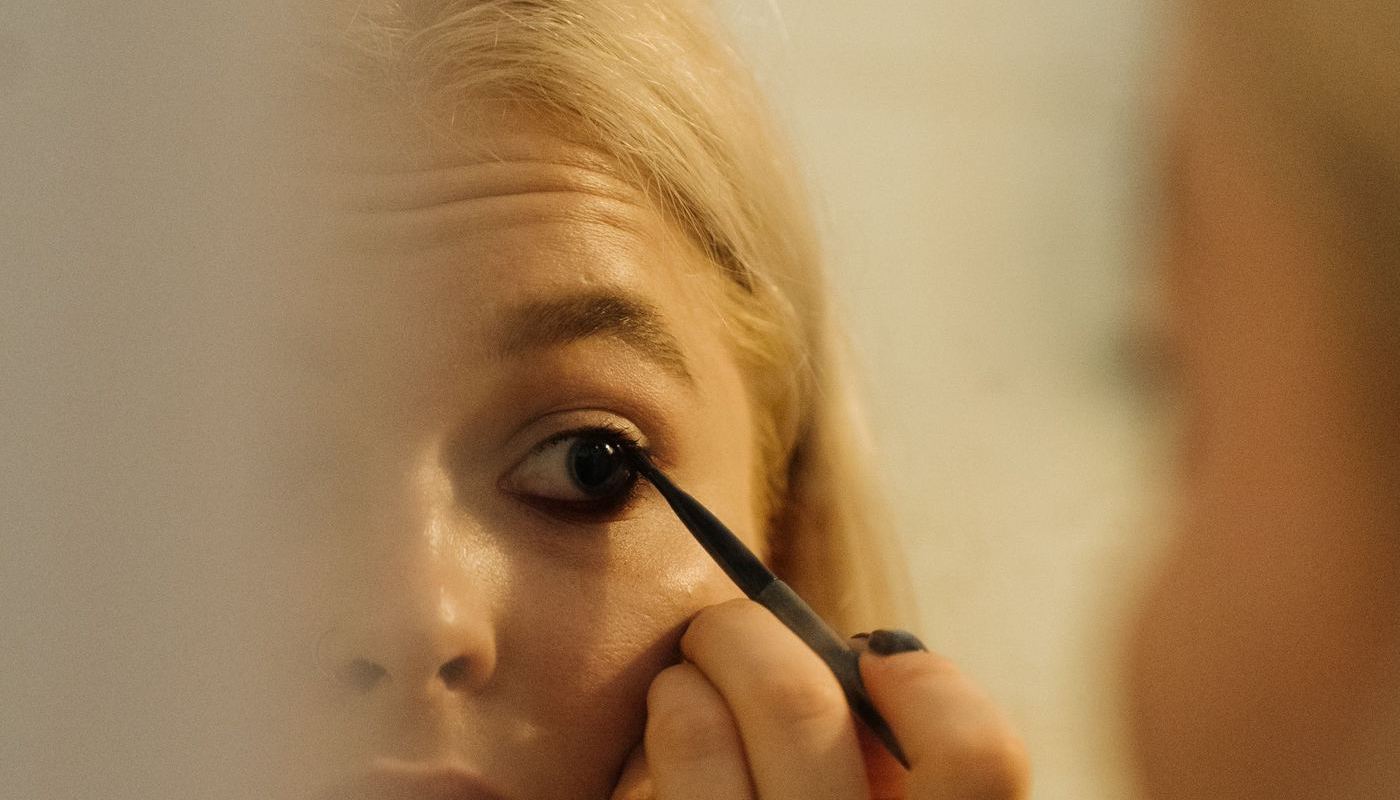
The complaint is remarkably consistent: the same liner, applied the same way, that worked for twenty years suddenly lands as a broken dotted line, drags the skin along with it, or vanishes into a fold by lunchtime. Nothing is wrong with your technique. Three specific things about the lid changed, and each one has a specific answer.
This is not the same problem as a hooded lid, though the two often arrive together. Hooded is about geometry, about a fold covering the space you are drawing on. This is about surface: what the skin does to a line while you are drawing it.
On this page
The three things that actually changed
- Surface texture. Lid skin is the thinnest on the body and it develops fine texture earlier than anywhere else. A line drawn across texture bridges the high points and misses the low ones.
- Slack. The skin moves under the pen instead of staying put. That is what produces both the wobble and the tugging sensation, and it is why the old habit of stretching the lid taut now backfires: the line lands on stretched skin and distorts when you let go.
- Contrast. Skin tone evens out and lashes thin. A black line that used to sit inside a frame of dark lashes now sits on its own, so it reads as a stripe rather than as definition.
Why liquid breaks into dashes
A felt or brush tip works by dragging ink across a surface. That is perfect on a smooth, taut lid and hopeless on a textured one, because the tip only touches the crests. Most people respond by pressing harder, which does not reach the hollows either and does move the skin.
A pencil works by depositing wax under pressure. Pressed rather than pulled, it fills the hollows, which is why the exact same eye can look uneven in liquid and clean in pencil. That is not a quality difference between the products. It is a difference in how they meet a surface.
Five adjustments, in order of impact
- Change format before you change brand. Move from liquid to a soft creamy pencil or a gel pot with a short brush. This single swap solves the majority of the complaints on this page.
- Support, do not stretch. Rest a fingertip on the brow bone and lift gently upward to smooth the surface. Never pull the lid sideways: the line will land distorted and settle wrong.
- Draw in short strokes, tight to the lashes. Three or four small strokes joined together beat one long pull, on skin that moves.
- Set it with powder. A matte shadow in the same tone pressed over the line does two jobs: it locks the wax so it does not travel into fine lines, and it softens the edge so any unevenness stops reading as a mistake.
- Keep it thin, and stop short. Weight sits in folds and emphasises them. A fine line tight to the lash roots does more for definition than a thick one, and stopping 3 mm before the inner corner keeps product out of the wettest spot.
The black question
Black is not off limits, and being told to give it up at a certain age is both patronising and wrong. What is true is narrower: black is the least forgiving shade on any surface with texture, because maximum contrast shows every break in the line. If your liner keeps looking harsh in the mirror and fine in photographs, that is the contrast talking rather than your technique.
Deep brown, charcoal, aubergine and navy all define the eye with a softer edge. Our liner colour by eye colour guide has the contrast chart, and navy in particular does something useful: it makes the whites of the eyes look slightly clearer by comparison.
What to buy
| Property | Why it matters here | What to avoid |
|---|---|---|
| Soft, creamy pencil | Deposits under light pressure, so the skin does not have to be dragged | Hard pencils that need force, and anything that needs sharpening to a fine point before it will write |
| Sets after application | Stays where it is put rather than migrating into fine lines | Pure kohl that never sets, unless you always set it with powder |
| Matte finish | Shine emphasises texture and crepe | Metallics and satins along the lash line, though they can work on the outer third |
| Gel pot plus short brush | The most control available, and you decide the pressure entirely | Long floppy brushes, which need a steady pull across the lid |
The pencil and gel sections of our shortlists by format are the relevant ones. The Urban Decay 24/7 pencil in particular is the archetype of "soft going on, sets firm afterwards", which is exactly the combination this page is asking for.
Questions people actually ask
Why does my eyeliner look broken and patchy now?
A liquid tip rides the high points of textured skin and misses the hollows. Switch to a pressed pencil or gel and the same line lands continuous.
Should I stop wearing black?
No, but consider softening it. Contrast reduces with age, so black shows every irregularity. Deep brown, charcoal or navy give the same definition with a kinder edge.
How do I stop the pencil dragging my eyelid?
Support the lid from the brow bone rather than stretching it sideways, use a softer pencil, warm the tip against your fingertip for a second, and work in short strokes.
My liner disappears into the fold within an hour. What now?
That is the hooded-lid problem rather than the texture one, and the answer is different: keep the line tight and let it set fully. See eyeliner for hooded eyes.
Does eye cream cause this?
Not the texture, but a rich cream applied along the lash line before makeup will make any liner travel faster. Keep it above the orbital bone and let it absorb before you start.