Eyeliner over 50: what to keep and what to change
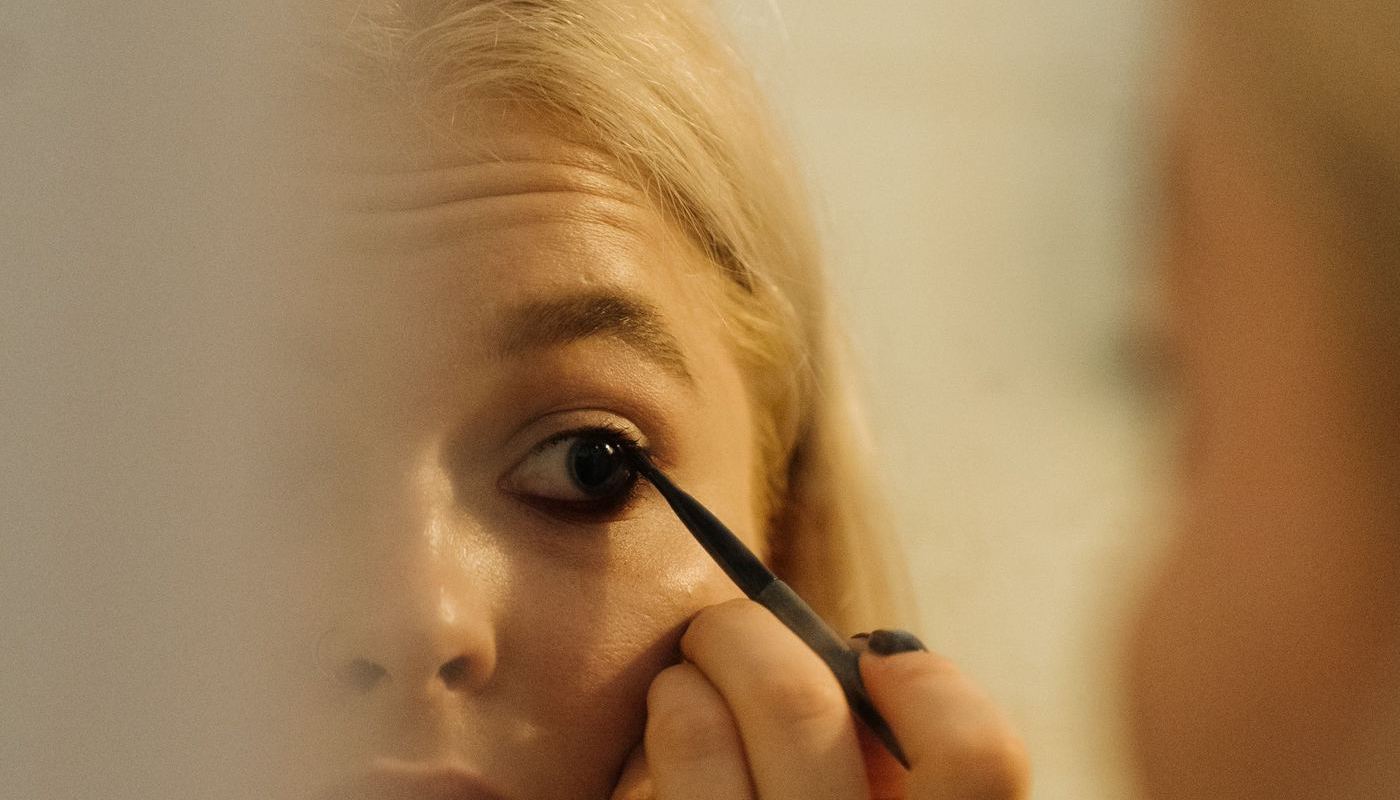
Search for eyeliner over 50 and you get two kinds of answer. One tells you to give up black, wings and possibly liner altogether. The other is a product list with no explanation. Neither answers the actual question: what changed, and what do I do about it?
Four things change on and around the eye after 50, and none of them means the end of eyeliner. They mean a few habits need adjusting. The technique detail for lids that have developed texture lives on the mature and crepey eyelids guide. This page is the wider view: what to keep, what to change, and which rules to ignore.
On this page
What actually changes after 50
Lid space shrinks. The skin above the crease settles, so many lids become hooded or heavier, and a line that used to sit neatly above the lashes is now partly folded away. That is a geometry problem, and the hooded eyes guide covers mapping a line with the eye open.
Skin texture develops. A liquid tip glides across the high points of textured skin and misses the hollows, so a line that was crisp for years starts landing as dashes. That is a surface problem, and the whole subject of the mature eyelids guide.
Lashes thin. A black line that once read as part of a dense lash line now sits on its own, which is why the same shade can suddenly look harsher without the product having changed.
The lower lash line moves. Fine lines under the eye give anything drawn there a path to travel along, so a pencil that stayed put at 35 spreads by lunchtime. That is smudging with a specific cause, not a bad product.
What to keep
Liner itself. The advice to stop wearing eyeliner after a certain age gets the mechanism backwards. Lashes thin and the lid gets heavier, which is precisely when definition at the lash line does the most work. Removing it makes the eye look undefined, not younger.
The upper lash line as the place definition lives. The lash roots are where a line reads as lashes rather than as a stripe. Tightlining, which fills the gaps between the roots with no visible line on the lid, becomes more useful with every year.
A wing, if it is short and lifted. Long, flat wings fold on a heavier lid and drag a lower outer corner down. A wing of a few millimetres, angled toward the tail of the brow, still works. The winged eyeliner guide has the mapping method.
What to change
Format: pencil or gel over liquid. Liquid needs a smooth, taut surface to lay a film. A soft pencil pressed into the lash line, or a gel with a short brush, deposits into texture instead of skipping over it. This one swap fixes most "my liner looks broken now" complaints.
Line weight: thinner, weighted to the outer third. A line of the same thickness from corner to corner reads as a band. Keep the inner two thirds fine and let it thicken only over the outer third, where it shapes the eye and where unevenness is least visible. Start about 3 mm in from the inner corner, the wettest point on the eye, where product travels and closes the eye.
Lower liner: outer third only, smudged, or none. A full lower line settles into the fine lines beneath it and closes the eye from below. If you want something there, take a soft pencil along the outer third and blend it upward into the wing so it reads as shadow.
Colour: soft black, deep brown or navy. Hard black against thinner lashes is maximum contrast, and maximum contrast shows every break in a line. Soft black, deep brown, aubergine or navy gives the same definition with a kinder edge. The liner colour by eye colour guide has the pairings, and navy has the side effect of making the whites of the eyes look clearer.
Set it with powder. Press a matte shadow in the same tone over the line. It locks a creamy pencil so it cannot migrate into fine lines and softens the edge so the line reads as part of the lashes. Ten seconds, and the line lasts until evening.
Does eyeliner make you look older?
It can, and the way it does is specific. A thick, hard line that runs the whole upper lash line and joins a dark lower line does three things: it shrinks the visible eye by ringing it in dark, it sits in every fine line, and its flat wing follows the outer corner downward.
A thin, open, lifted line does the opposite of all three: the eye reads larger, the line sits where texture never shows, and the flick goes up. So the line you were taught at twenty can make you look older. The line adjusted for the eye you have now does not.
The five-minute routine
- Prepare the lid. Let eye cream absorb, then press a little translucent powder over the lid so the pencil has a dry surface.
- Tightline the upper lashes. Press a soft pencil into the gaps between the lash roots from underneath. No visible line yet.
- Draw the upper line in short strokes. Start 3 mm in from the inner corner, keep it fine until the outer third, then let it thicken slightly. Lift gently at the brow bone, never sideways.
- Add a short lifted wing, eye open. Look straight ahead, dot where the wing should end, then join the dot to the line.
- Soften the lower outer corner, or skip it. A little pencil on the outer third, blended upward. Nothing on the inner two thirds.
- Set with powder. Press a matte shadow in the same tone over the line. Curl lashes, mascara, done.
What to ignore
Rules about age and black. "No black after 50" is a rule about contrast dressed up as a rule about age. If black works on your colouring, wear it. If it has started to look harsh, the answer is a softer shade, not abstinence.
Tutorials that assume lid space you may not have. Most tutorials are filmed on a young eye with a clear expanse of lid. If a technique never works on you, the fault is the tutorial's assumption, not your hands. The eyeliner by eye shape hub sorts techniques by the lid they were designed for.
What to buy
| Property | Why it matters here | What to avoid |
|---|---|---|
| Soft, creamy pencil that sets | Deposits into texture under light pressure, then stays put | Hard pencils that need dragging, and pure kohls that never set |
| Gel pot with a short brush | Full control over pressure; can be pressed rather than pulled | Long floppy brushes, and any liquid tip on a lid with visible texture |
| Soft black, brown or navy | Lower contrast against thinner lashes, so breaks in the line do not show | The hardest black in the range, worn as a full ring |
| Matte finish | Shine sits in fine lines and emphasises them | Metallic or glitter liner along the lash line |
The pencil and gel sections of our shortlists by format are the ones to read; the Urban Decay 24/7 pencil is the reference example of soft going on and firm once set. If a steady hand is the difficulty rather than the surface, the shaky hands guide has the bracing and dot method.
Questions people actually ask
Should you wear eyeliner after 50?
Yes. Lashes thin and lid space shrinks after 50, which is exactly when definition at the lash line does the most work. What changes is the format, the weight of the line and where it goes.
Does eyeliner make you look older?
A thick, hard line all the way round the eye can, because it closes the eye and sits in fine lines. A thin line on the upper lashes, weighted to the outer third and lifted at the end, does the opposite.
What is the best eyeliner for women over 50?
A soft, creamy pencil that sets, or a gel pot with a short brush, in soft black, deep brown or navy. Both deposit into skin texture rather than skipping over it.
Should I put eyeliner on my lower lid after 50?
Only on the outer third, smudged upward, or not at all. A full lower line settles into fine lines and closes the eye from below.
Can you wear winged eyeliner over 50?
Yes, if it is short, lifted toward the brow tail and drawn with the eye open. Long, flat wings fold on a heavier lid and drag the corner down.