Eyeliner with shaky hands
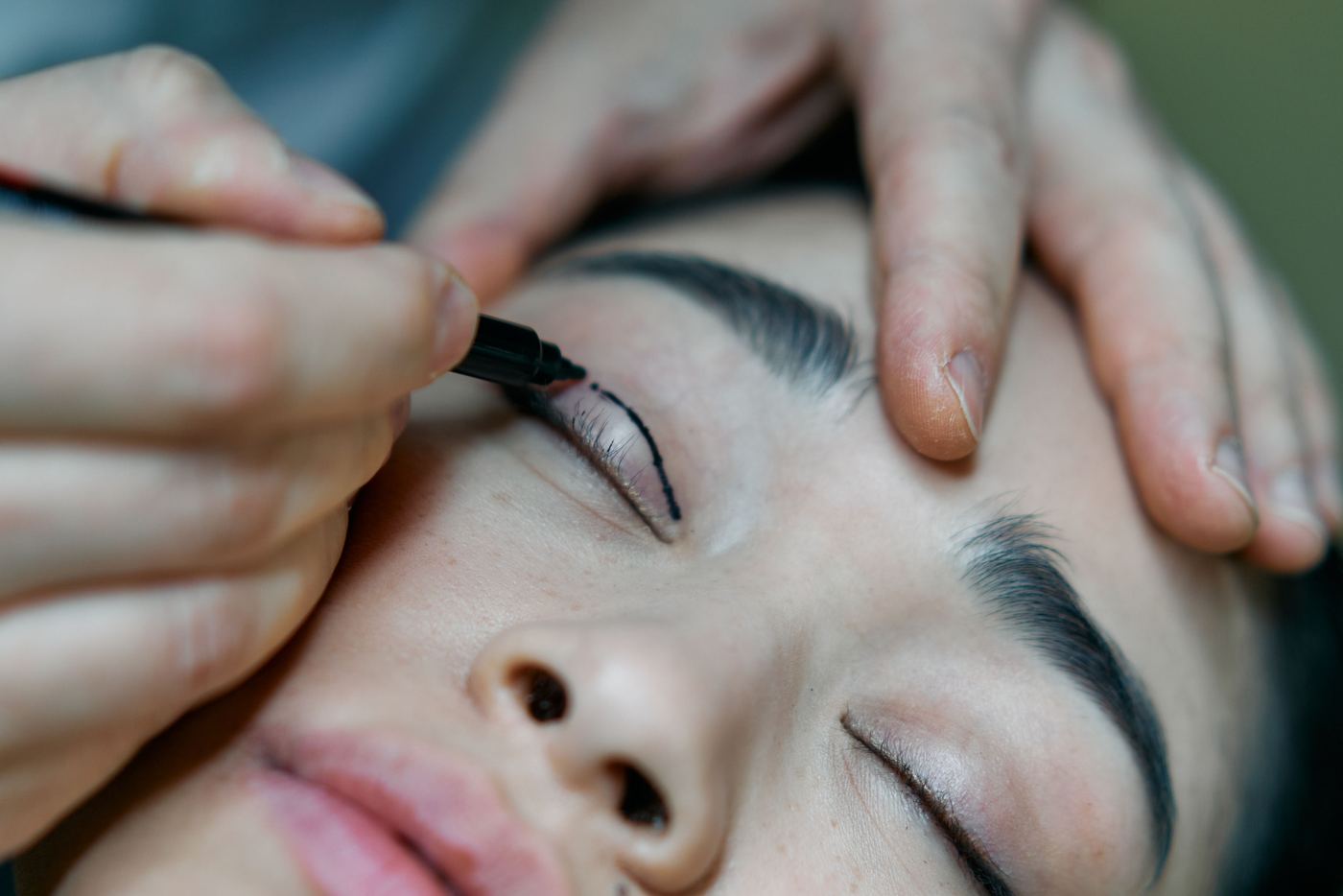
Everyone who searches for eyeliner for shaky hands has been told the same thing: practise, and your hand will steady. It will not, and it does not need to. People with steady hands draw wobbly lines, and people with a visible tremor draw clean ones every day. The difference is what the hand rests on, how far the tip is from that resting point, and whether the line is drawn as one long stroke or as several short ones.
This page is the method, and it works whatever the cause, from too much coffee to a tremor you have had for years. One sentence on the medical side and no more: a tremor that is new or getting worse is worth mentioning to a doctor. Everything below is about eyeliner.
On this page
Why the tip shakes more than the hand
Hold a pencil at arm's length and the tip jumps about. Hold it with your wrist on the table and it barely moves. Same tremor, same pencil. The difference is the lever: a small movement at the wrist becomes a large one at the end of a long arm and a tiny one at the end of a short arm. Everything on this page does one of two things. It shortens the distance between the tip and the point where your hand is supported, or it removes the need for a continuous stroke.
A wobble across five millimetres is invisible in a finished line. The same wobble across twenty-five millimetres is a visible kink. So the plan is not to eliminate the shake. It is to give it no room to show.
Anchor: shorten the lever
Sit down. Standing at a bathroom mirror with your arm in the air is the longest lever there is. Put the mirror on a table, low enough that you look down into it. Looking down flattens the lid and keeps it still.
Now build the support from the outside in. Elbow on the table. Heel of the hand against your cheek. Little finger planted on the cheekbone, just below the outer corner of the eye. With all three in place, the only thing moving is the last few centimetres of pencil, and a tremor across that distance is tiny. Hold the pencil close to the tip.
If the lid moves, rest a fingertip of the other hand on the brow bone and lift very gently. Do not pull the skin sideways: the line lands on stretched skin and shifts when you let go, which looks like a wobble even when there was none. On a lid with texture this matters more still, as the mature eyelids guide covers.
Dot, then join
A continuous line gives a tremor twenty-five millimetres of open road. The dot method gives it five. Instead of drawing the line, you place it in pieces.
- Place three or four dots along the upper lash line, tight to the roots: one near the inner corner, one or two above the middle, one at the outer corner. A dot cannot wobble.
- If you want a wing, place its end dot now, out past the corner where the wing should finish. The one real decision on the eye is made with a dot, not a stroke.
- Join each pair with a short stroke, working outward. Each stroke has its start and end already fixed, so the hand only has to cover the gap. Re-anchor between strokes if you need to.
- Thicken only where you want to. A second short stroke over the outer third puts the weight where it shapes the eye and leaves the inner two thirds fine.
This is the method the winged eyeliner guide uses for the wing, and the one we recommend for beginners whether their hands shake or not. Nobody's hand is steady across a full stroke. The dots make that irrelevant.
Which formats forgive a wobble
A soft pencil is the most forgiving. It is applied in short pressed strokes, which is what the dot method asks for anyway, and a wobble in pencil becomes a smudge that a cotton bud blends into the lash line. The same wobble in liquid is a permanent kink. Look for a pencil that is creamy going on but sets after a minute.
A felt-tip pen is next. The tip is firm, never needs loading, and gives a fine line with almost no pressure. Draw it dot to dot in the same way. It dries fast and cannot be blended, but the firm tip removes the extra wobble a soft brush adds.
A gel pot with a short, stiff brush sits in between. Gel can be pressed rather than dragged, and a short brush is a short lever. The cost is reloading the brush between strokes.
A dip brush is the least forgiving. A long, flexible brush loaded with liquid is the longest lever with the highest penalty for error. If you love the finish, get there through a felt tip. The types compared page sets out all four side by side, and the liner finder will point you at a format in about a minute.
The wing
The wing is the part most people with shaky hands give up on, and the part the dot method handles best. Place the end dot first, eye open and looking straight ahead. Then draw from that dot back toward the lash line, not outward from it. Drawing inward means the stroke ends at the lashes, where a wobble disappears, rather than at the tip, where it shows.
Guides are allowed. Tape angled from the outer corner toward the tail of the brow gives the wing's lower edge a hard border to draw against; the edge of a card does the same. Stamp-style liners print the wing in one press and take the stroke out altogether, and the dot method then joins the stamp to the lash line. Keep the wing short: a long wing is a long stroke, and a short lifted one does more for the eye anyway, especially on a hooded lid.
Fixing a wobble in one wipe
Mistakes feel expensive because most people fix them by drawing over them, which makes the line thicker and the wobble bigger. Do not. Dip a cotton bud in remover and run it along the wobble from the outside in. One wipe takes it off. Then re-dot and re-join that section.
A small flat brush with a little concealer sharpens a ragged wing edge. Taking it all off at night is covered in removing eyeliner. The point is this: with a cotton bud within reach, a wobble costs ten seconds, and once you know that, the hand relaxes and wobbles less.
What to buy
| Format | Why it helps a shaky hand | What to watch |
|---|---|---|
| Soft pencil that sets | Short pressed strokes; a wobble blends into a smudge, and the line locks after a minute | Hard pencils that need dragging force, which makes the shake worse |
| Felt-tip pen | Firm tip, no loading, fine line with almost no pressure | Dries fast, so wipe a mistake immediately |
| Gel pot with a short brush | Short lever, can be pressed rather than pulled | Reloading between strokes; keep the strokes short |
| Stamp or guide for the wing | Removes the one stroke that shows every wobble | Match the stamp size to your eye; the smallest is usually right |
Of the products covered on this site, the Urban Decay 24/7 pencil fits the "soft, then sets" description and the Stila Stay All Day is the firm felt-tip reference. The Stila versus NYX Epic Ink comparison covers firm felt tip against flexible brush tip, which for a shaky hand is the whole decision: firm wins. Whatever you choose, the format matters less than the anchor and the dots.
Questions people actually ask
What is the easiest eyeliner for shaky hands?
A soft pencil. A wobble in pencil becomes a smudge you can blend into the lash line, where the same wobble in liquid becomes a visible kink. A felt-tip pen is next; a dip brush is the least forgiving.
Is pencil or liquid eyeliner better for shaky hands?
Pencil. It is drawn in short pressed strokes rather than one long pull, mistakes blend away, and it does not dry instantly. If you want a liquid finish, use a felt-tip pen, drawn between dots rather than in one stroke.
How do you do winged eyeliner with shaky hands?
Place a dot where the wing should end first, then fill from that dot back toward the lash line in short strokes. A stamp-style tip, a piece of tape or the edge of a card gives the outer edge a guide so the wobble has nowhere to go.
How do you keep your hand steady when applying eyeliner?
You do not steady the hand, you shorten the lever. Sit, elbow on the table, heel of the hand on the cheek, little finger on the cheekbone, mirror low so you look down. Then draw dot to dot.
Is there an eyeliner tool for shaky hands?
Stamp-style wing tips and wing guides take the long stroke out of the job, and a cotton bud with remover fixes any wobble in one wipe. Beyond that, the tool is the method: anchor, dot, join.