Why eyeliner will not stay on your waterline
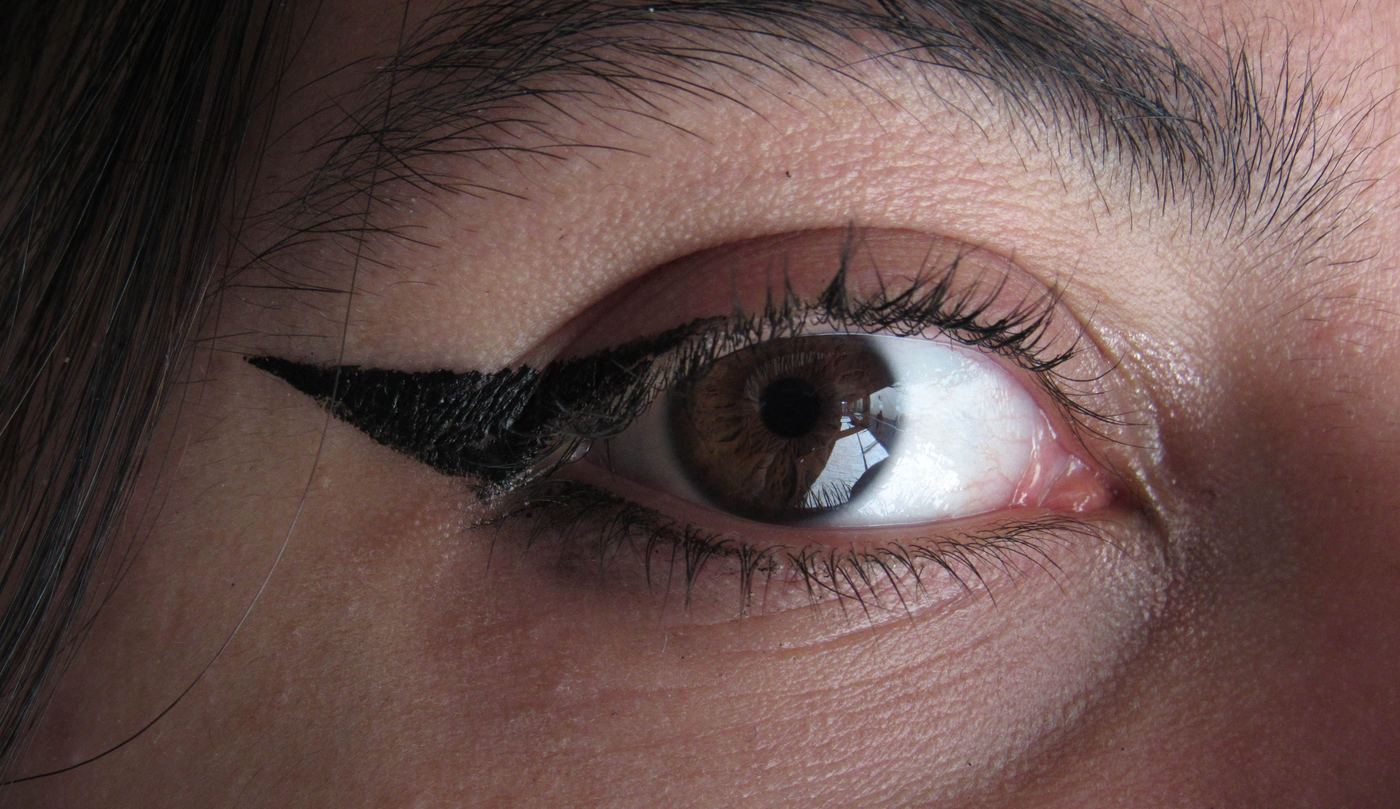
You draw the line along the inner rim of your lower lid, it looks sharp for ten minutes, and then it is gone: faded, patchy, or sitting as a grey shadow under your lashes. Nothing is wrong with the pencil or with you. The waterline is the one place on the eye that is built to shed whatever lands on it.
This page is about the rim itself: what it is made of, why most formulas fail on it, which survive, and how to apply them. The upper lash line technique lives in our tightlining guide, which also covers the eye-health research.
On this page
What the waterline actually is
The waterline is the flat inner edge of the eyelid, the strip between the lash roots and the eyeball. It looks like skin in the mirror and it is not. It is a moist mucous surface, closer to the inside of your lip than to the lid above it, and it does three things that work against makeup.
First, it carries the tear film. A thin layer of tears coats the eye and spreads over the rim, so the rim is never dry for more than a moment. Second, it is wiped. Every blink drags the upper lid across the lower rim, the way a wiper crosses a windscreen, thousands of times a day. Third, the lower rim is where tears collect. They drain at the inner corner, and the rim is the channel that carries them there, so everything on it is being washed toward the inner corner all day.
Why liquid liner lifts off in minutes
Liquid and felt-tip liners work by drying. The pigment is carried in a water-based or film-forming base, and when that base dries on a dry surface it bonds and leaves a thin coloured film. Take away the dry surface and the mechanism is gone. On the rim the base never dries, because the tear film keeps rewetting it, so no film forms. You get a smear of pigment sitting in moisture, and the next blink wipes it off. The "eyeliner won't go on my waterline" complaint is nearly always a liquid or a pen, and it was never designed to go there.
Pencils work differently. A pencil deposits a soft solid: a blend of waxes and oils that carries the pigment and stays put by clinging, not by drying. Wax does not mix with water, so the tear film cannot dissolve it. That is the whole reason a pencil holds on the rim and a liquid does not. It is a chemistry difference, not a quality difference.
Holding is not the same as staying, though. A waxy deposit sits on the rim as a solid, and the blink still drags across it. Some migrates onto the lower lash line as a grey shadow. Some works into the tear film. That is the "smudging on my waterline" complaint. You can slow it down. You cannot stop it.
What holds, and for how long
| Format | On the rim | Why |
|---|---|---|
| Waterproof kohl pencil | Best | Wax-based, so the tear film cannot dissolve it. Soft enough to deposit on a surface you cannot press hard against. |
| Long-wear gel pencil | Good | Sets after a minute, which slows migration onto the lash line. Less payoff on a wet surface than a kohl. A standard non-waterproof pencil travels within the hour. |
| Liquid, pen or felt-tip | Avoid | Needs a dry surface to form a film. Never bonds, wipes off on the first blink. A loaded dip brush against the eyeball is also a poor idea. |
Of the pencils already on this site, Catrice Kohl Kajal Waterproof and Rimmel Scandaleyes are the kohl-style options, and Urban Decay 24/7 Glide-On is the archetype of a pencil that goes on soft and sets firm. Our waterproof vs smudgeproof guide explains why those are two different claims, and the kohl and pencil sections of our shortlists by format are the relevant ones.
How to apply it so it lasts
- Sharpen or wipe the tip. A freshly cut tip deposits more colour in one pass, so you are not sawing at the rim.
- Dry the rim. One pass with a clean cotton bud, then work quickly.
- Hold the lid, do not stretch it. One fingertip just below the lashes, pulling down only enough to expose the rim.
- Short strokes, outer corner first. Three or four short strokes beat one long drag. Stop before the inner corner, where the tears drain.
- Look up, blink twice. This settles the deposit and shows you what will migrate.
- Wipe under the eye. A clean cotton bud under the lower lashes lifts what the blink pushed out. A little matching powder shadow pressed into the lower lash line catches the rest.
Upper rim vs lower rim
The upper waterline holds far better than the lower one, for a reason that is obvious once said: tears do not pool there. The upper rim is wet, but it is not a channel. Liner pressed between the roots of the upper lashes, which is tightlining, stays for hours and gives most of what people want from the waterline anyway: a denser, darker lash line with no visible band of makeup. The tightlining guide has the steps, and it is the better first move on hooded eyes and small eyes, where a dark lower rim closes the eye.
The lower waterline is the harder job: it is where tears collect before draining. That is why the inner third fails first and why the smudge always lands under the eye, never above it. A workable compromise is dark on the upper rim, and on the lower rim either nothing or a nude pencil, which brightens the eye and is invisible when it fades.
When to leave the rim alone
The rim is not blank skin. It carries the openings of the oil glands that feed the tear film, and there is published research associating waterline application with higher dry-eye symptom scores, covered in the tightlining guide rather than restated here. Read that section before you make waterline liner a daily habit.
Beyond the research, three groups do better keeping liner on the lash line. Contact lens wearers, because pigment on the rim ends up on the lens: see eyeliner with contact lenses. Anyone with sensitive or reactive eyes, because the rim is the most direct route to the eye surface. And anyone whose eyes water constantly, because a wet rim is a losing battle; the watery eyes guide covers where liner survives.
If what you wanted from the waterline was staying power, the fix may be a different placement rather than a different pencil. Our liner finder narrows the format in about a minute, and if liner travels everywhere, not only on the rim, the smudging guide covers the lid.
Questions people actually ask
Why won't my eyeliner stay on my waterline?
Because the waterline is wet. It carries the tear film, the upper lid wipes it on every blink, and tears sweep along it toward the inner corner. Liquid and pen liners need a dry surface to form a film, so they never bond there. Only a wax-based pencil holds, and even that migrates.
What eyeliner stays on the waterline?
A waterproof kohl pencil or a long-wear gel pencil that sets. Both are wax-based, so the tear film cannot dissolve them. Liquid and felt-tip liners are the wrong tools for the rim.
How do you get eyeliner to stick to your waterline?
Dry the rim with a clean cotton bud first, then use a sharpened waxy pencil in short strokes starting at the outer corner. Look up, blink twice, and wipe under the eye to lift whatever the blink pushed out.
Why does my eyeliner smudge on my waterline?
A pencil sits on the rim as a soft solid, and the blink drags across it thousands of times a day, pushing some onto the lower lash line as a shadow. Setting the lower lash line with a matching powder slows this. Nothing stops it entirely.
Is it bad to put eyeliner on your waterline?
The rim carries the oil gland openings that feed the tear film, and published research links waterline application to higher dry-eye symptom scores, covered in the tightlining guide. Occasional use is a different proposition from a daily habit.